The best wireless mice depend on how you work or play: a compact travel design, an adjustable ergonomic shape, or extra gaming controls can matter more than a long feature list. These picks span everyday office use and specialized gaming, so compare connection options, battery details, button layouts, and hand fit before choosing.
Quick Top Products
JLab GO Charge Wireless Mouse
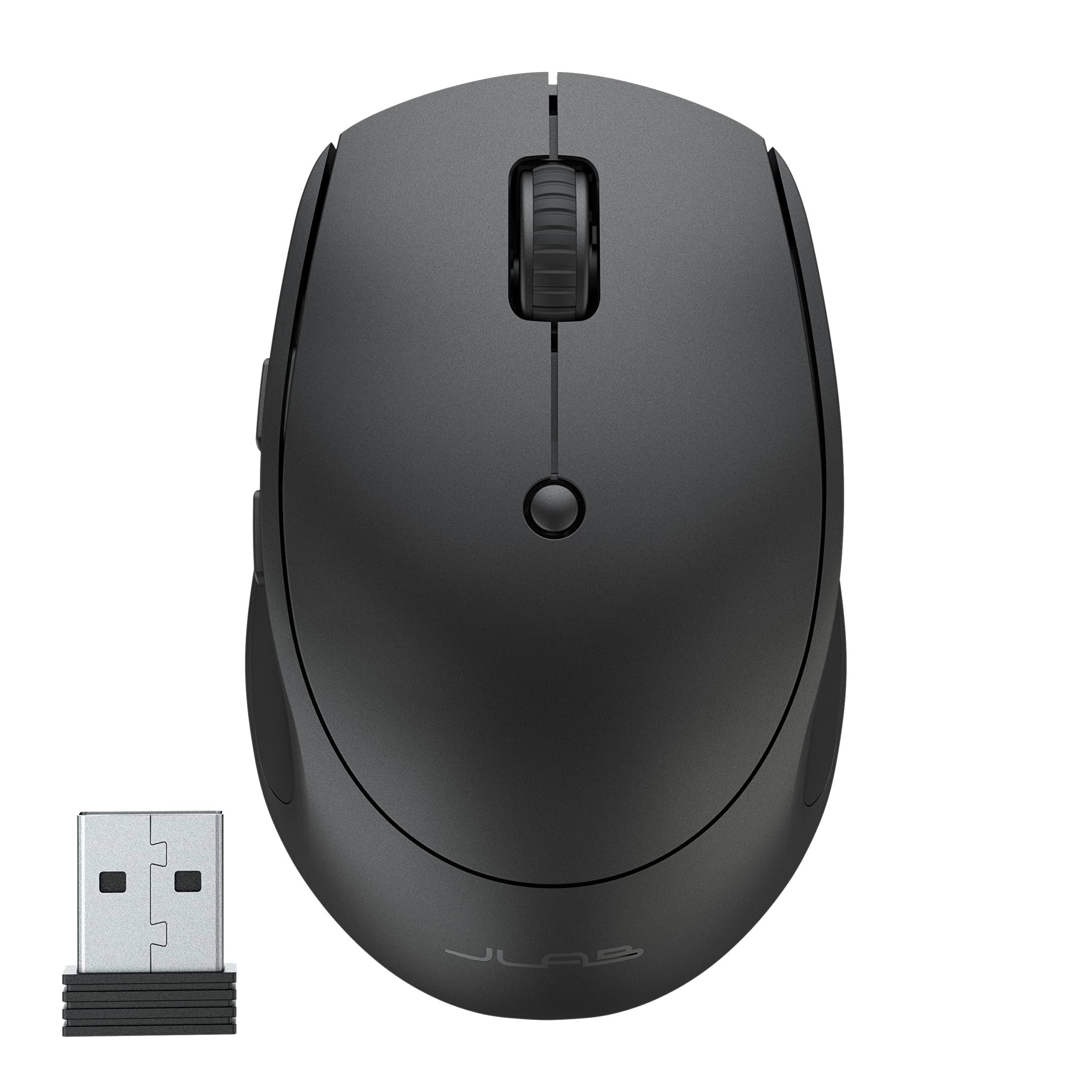
- Connects to three devices through Bluetooth 5 or a USB wireless dongle.
- Offers adjustable DPI tracking for cursor-speed control.
- Has silent click buttons and a battery rated for four or more months per charge.
Best For: People who want a compact rechargeable mouse for switching among work devices.

SteelSeries Prime Wireless
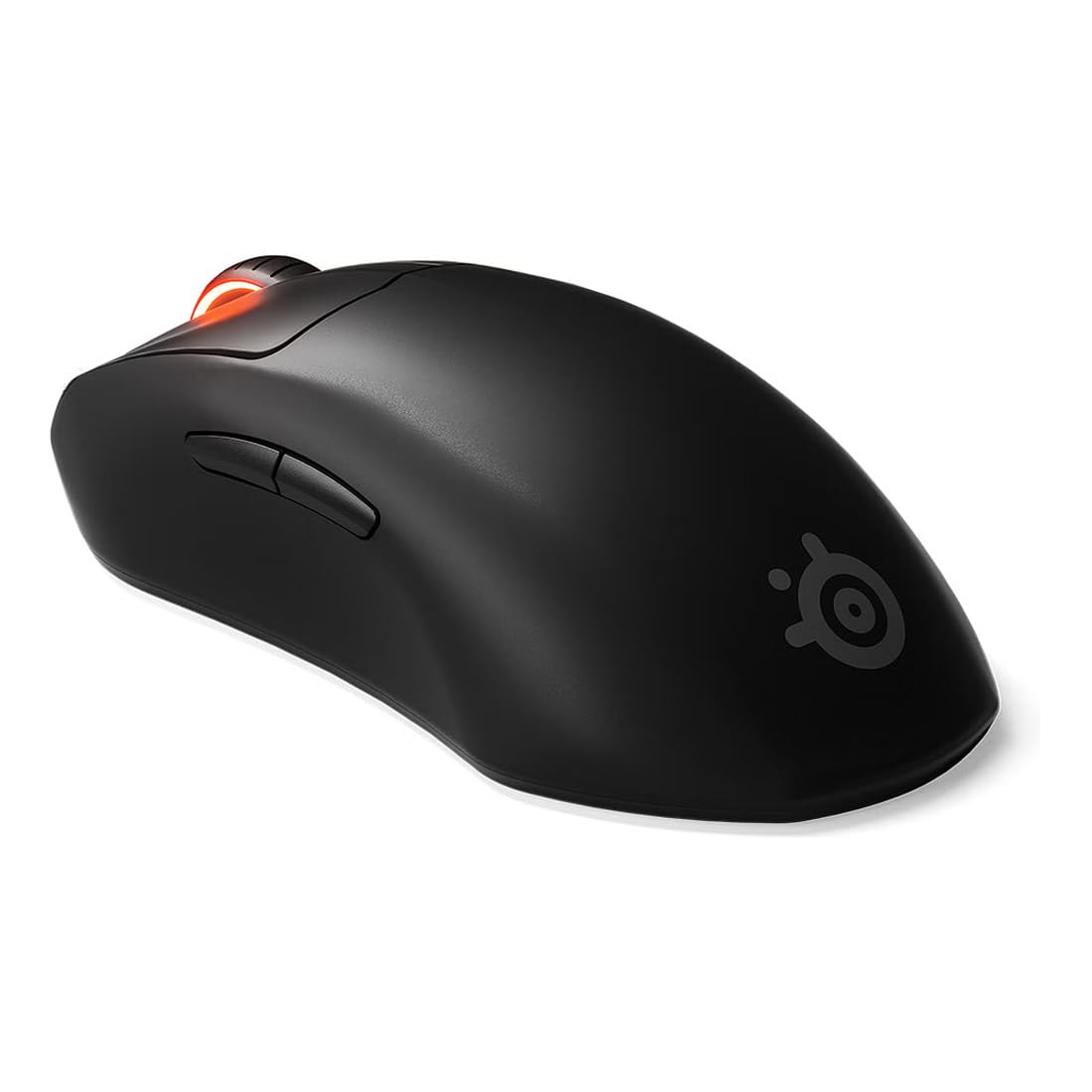
- Right-handed shape supports finger, palm, and claw grips.
- TrueMove Air sensor is specified at 18K CPI, 400 IPS, and 40G.
- Wireless battery life is stated at up to 100 hours.
Best For: Right-handed FPS players looking for a gaming-focused wireless mouse and long stated battery life.
SteelSeries Prime Mini Wireless
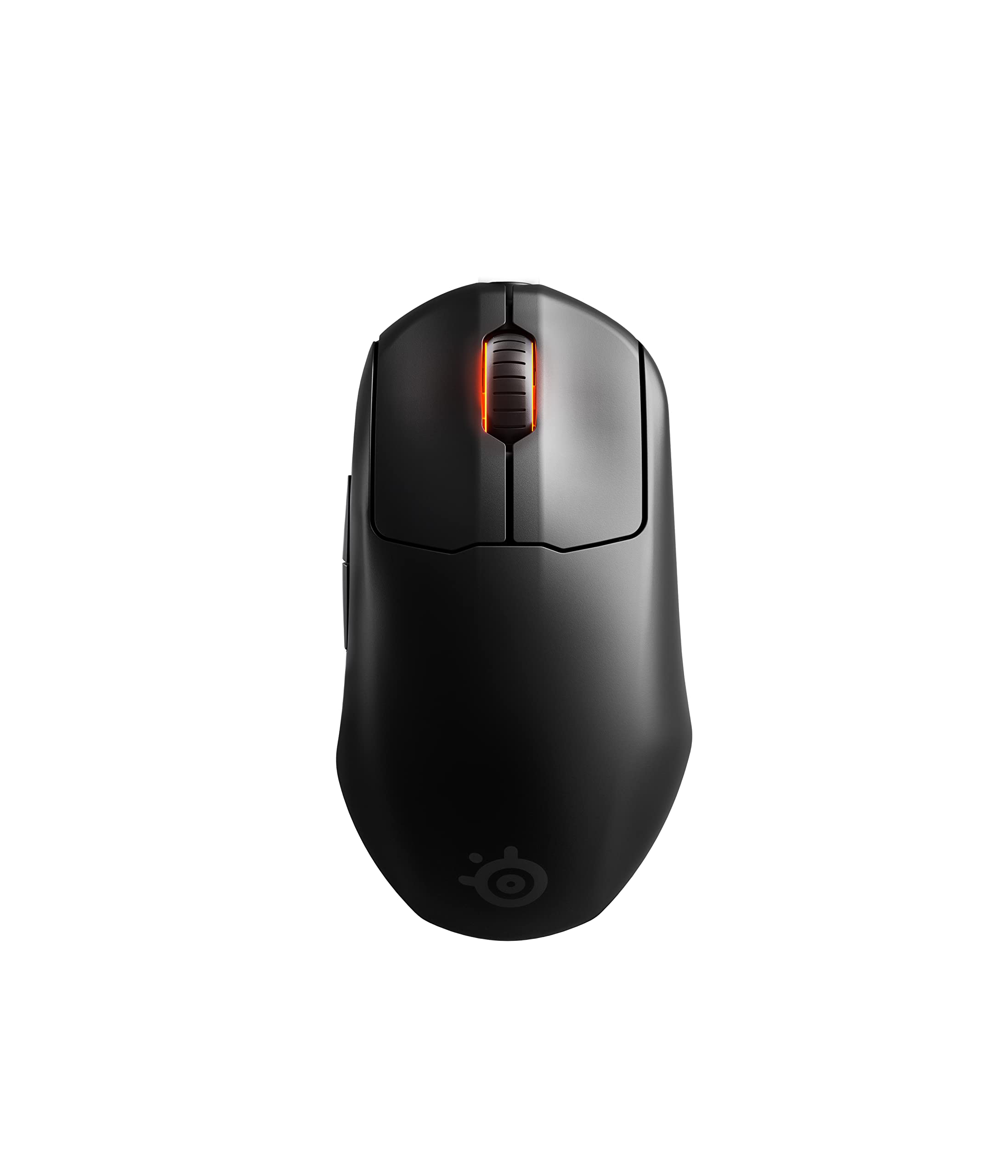
- The mini design weighs 74g.
- TrueMove Air tracking is specified at 18K CPI, 400 IPS, and 40G.
- Uses lag-free 2.4GHz wireless with a stated 100-hour battery life.
Best For: FPS players who prefer a smaller gaming mouse with wireless battery life specified up to 100 hours.
SteelSeries Rival 3 Wireless Gen 2
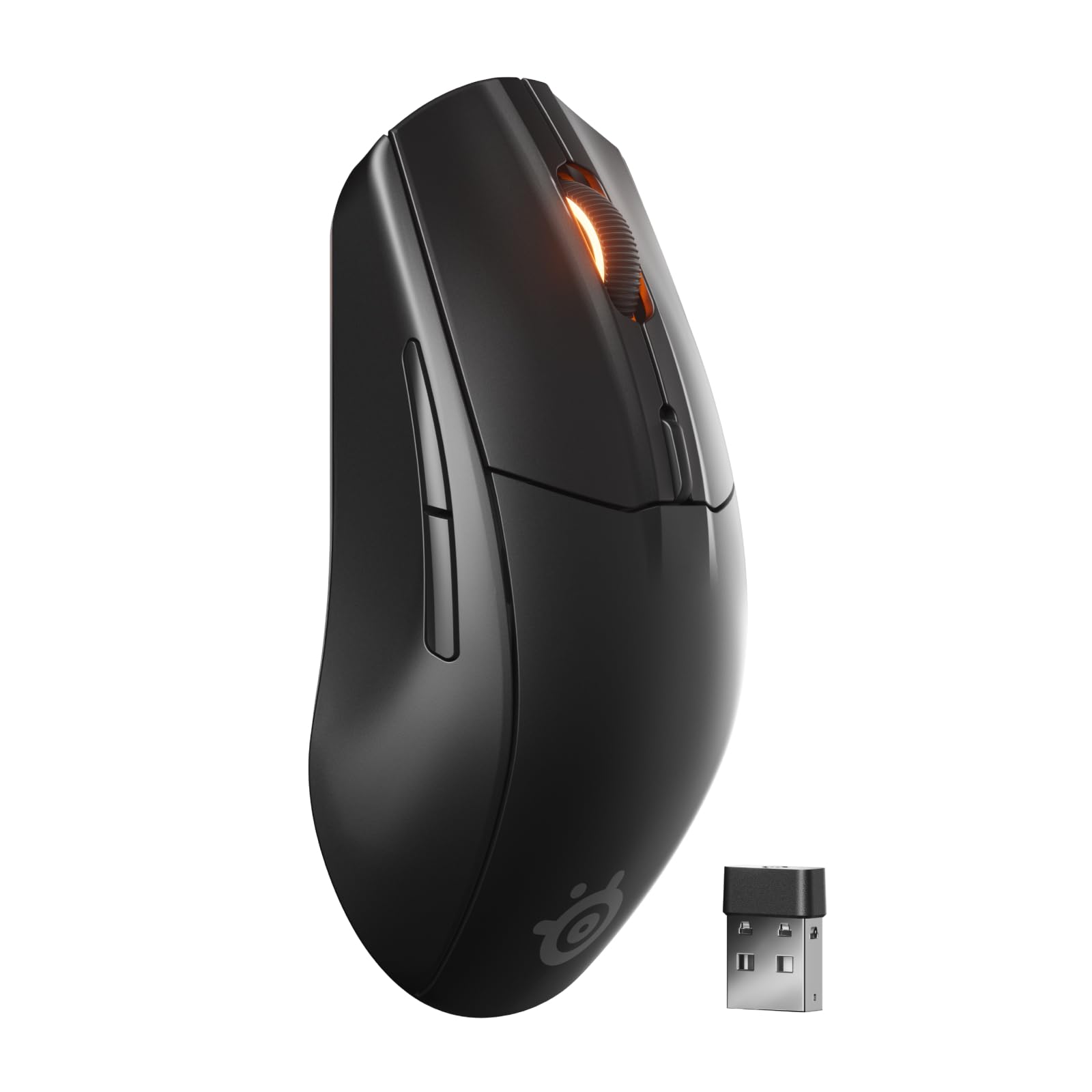
- Switches between 2.4GHz wireless and Bluetooth.
- TrueMove Air optical sensor is rated at 18K DPI.
- Battery life is stated up to 200 hours on 2.4GHz and 450 hours on Bluetooth.
Best For: Players who want to switch between 2.4GHz gaming wireless and Bluetooth, with long stated battery life.
SteelSeries Aerox 3 Wireless
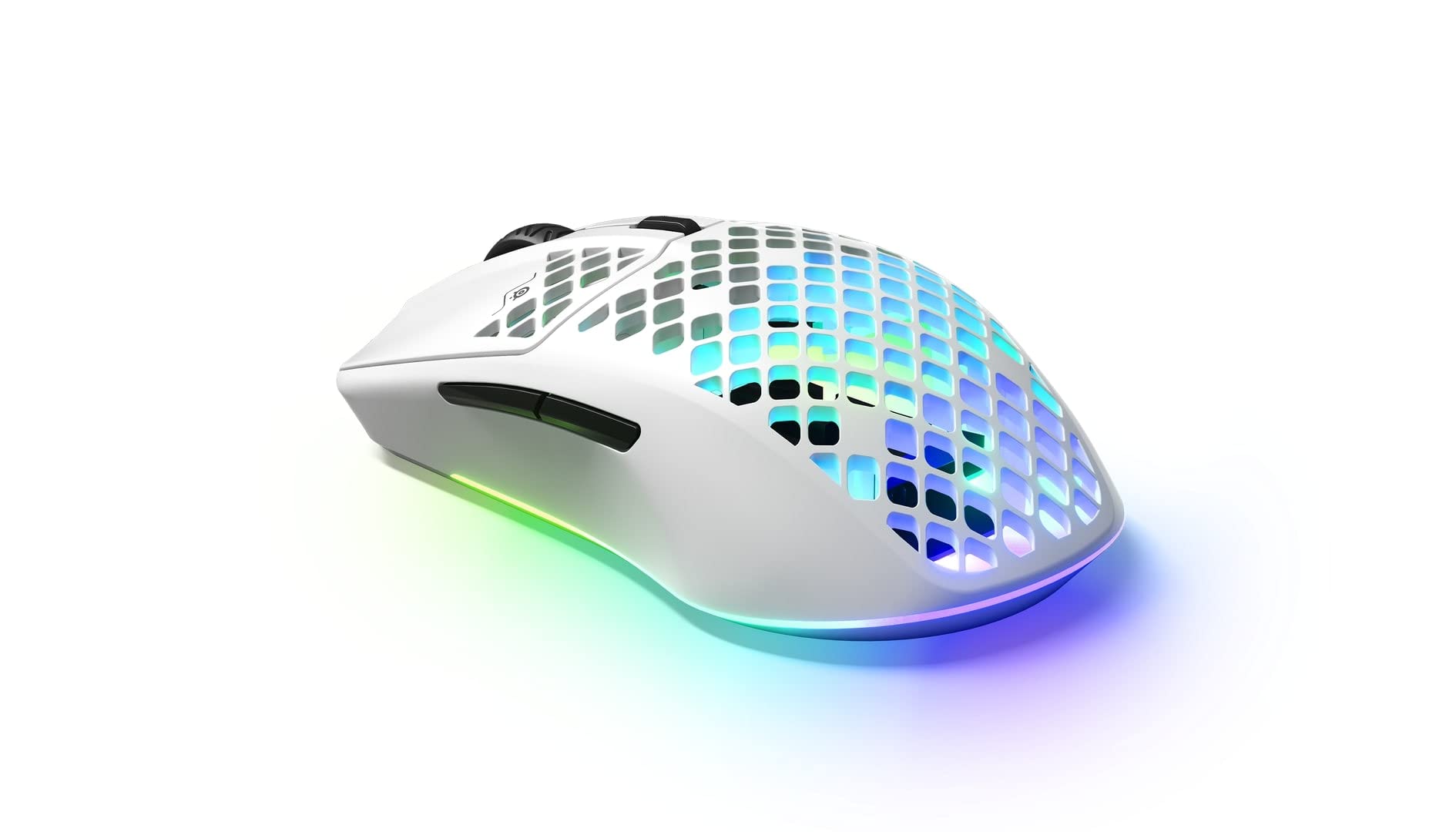
- The holey shell brings its stated weight to 68g.
- Connects over 2.4GHz or Bluetooth 5.0.
- Three-zone RGB offers 16.8 million configurable colors.
Best For: Players seeking a lightweight gaming mouse with Bluetooth, 2.4GHz, and customizable RGB lighting.
SteelSeries Aerox 5 Wireless
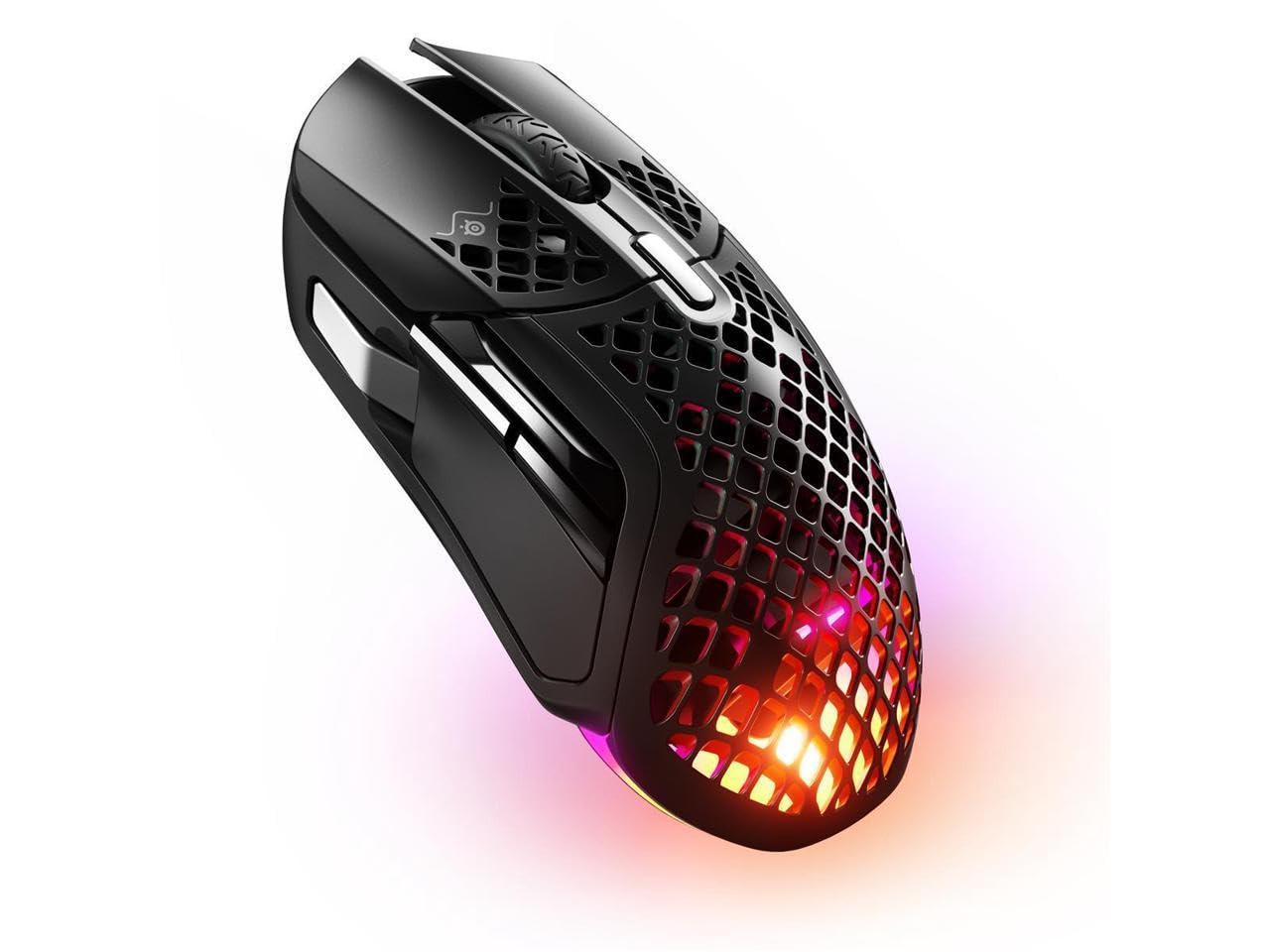
- Includes nine programmable buttons, a side panel, and a flick switch.
- Weighs 74g with its holey shell design.
- Supports Bluetooth and 2.4GHz wireless connectivity.
Best For: Players who want programmable gaming shortcuts and both Bluetooth and 2.4GHz connections.
SteelSeries Aerox 9 Wireless
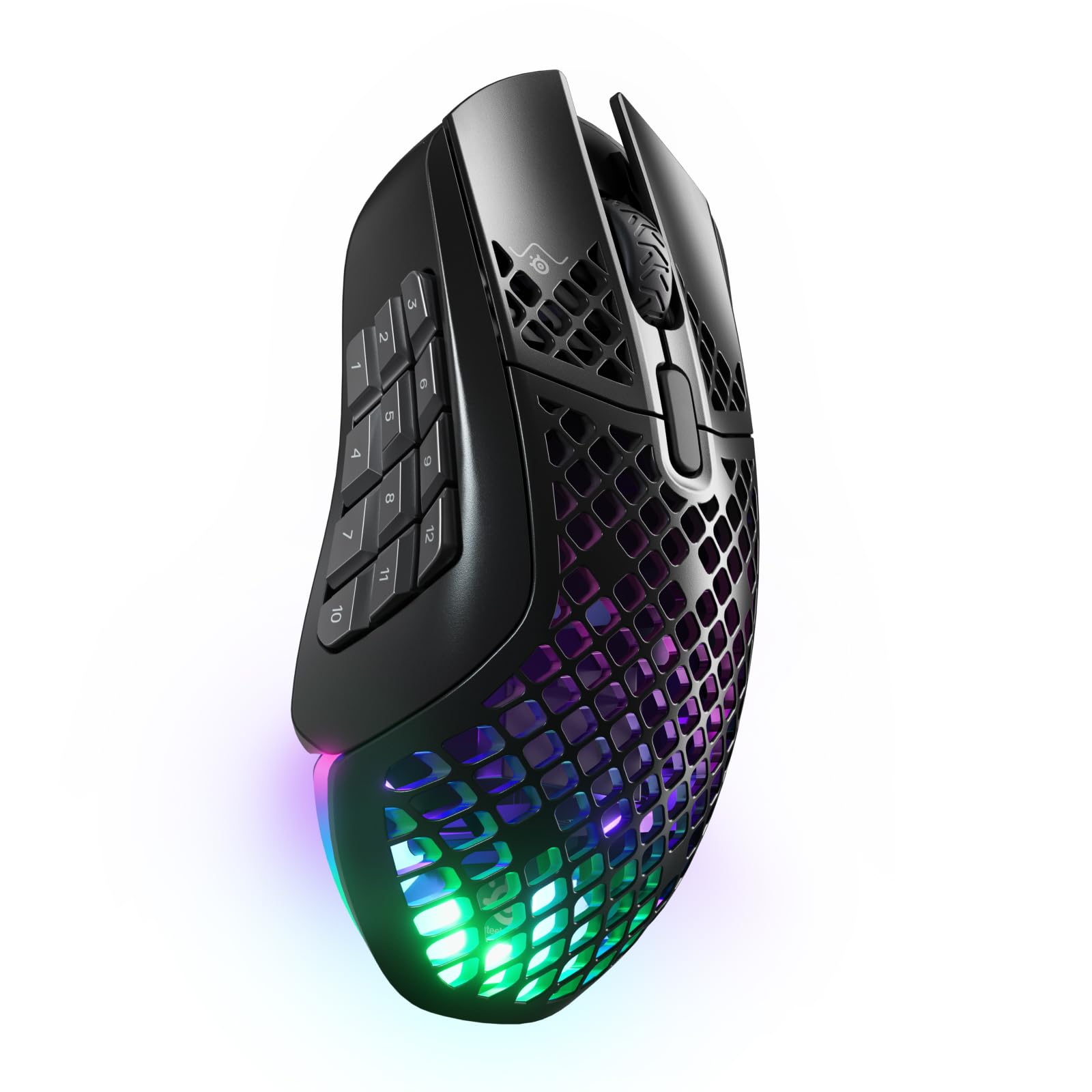
- Has 18 programmable buttons, including a 12-button side panel.
- The perforated shell weighs 89g.
- Supports 2.4GHz and Bluetooth 5.0 connections.
Best For: Players who want a lightweight gaming mouse with an 18-button layout and dual wireless modes.
SteelSeries Rival 650 Quantum Wireless
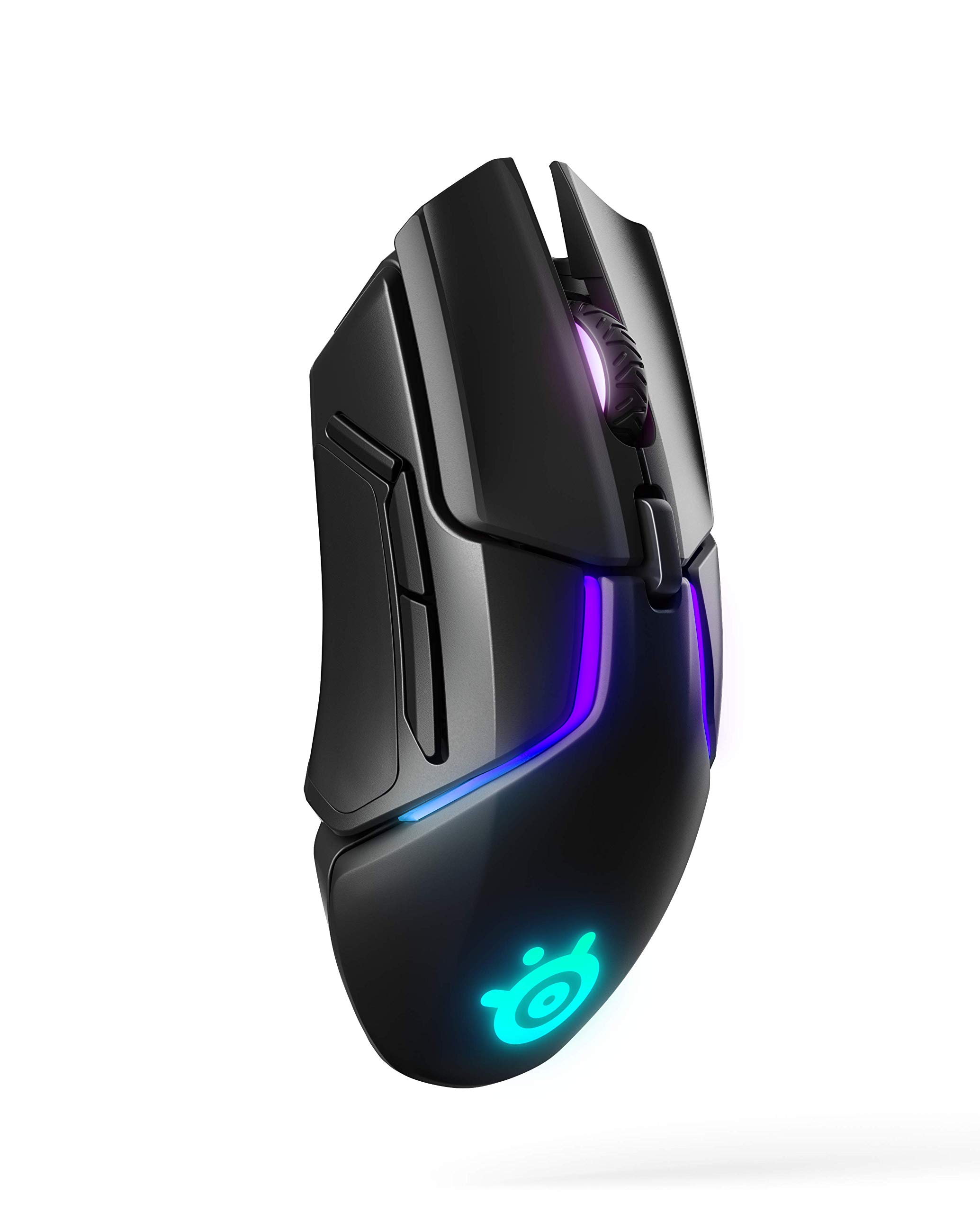
- Offers 256 center-of-gravity weight configurations.
- A 15-minute rapid charge is stated to provide 10 hours.
- The secondary sensor adjusts lift-off distance from 0.5 to 2 millimeters.
Best For: Players who want adjustable mouse weight and rapid charging for a gaming-focused setup.
JLab Epic Wireless Mouse
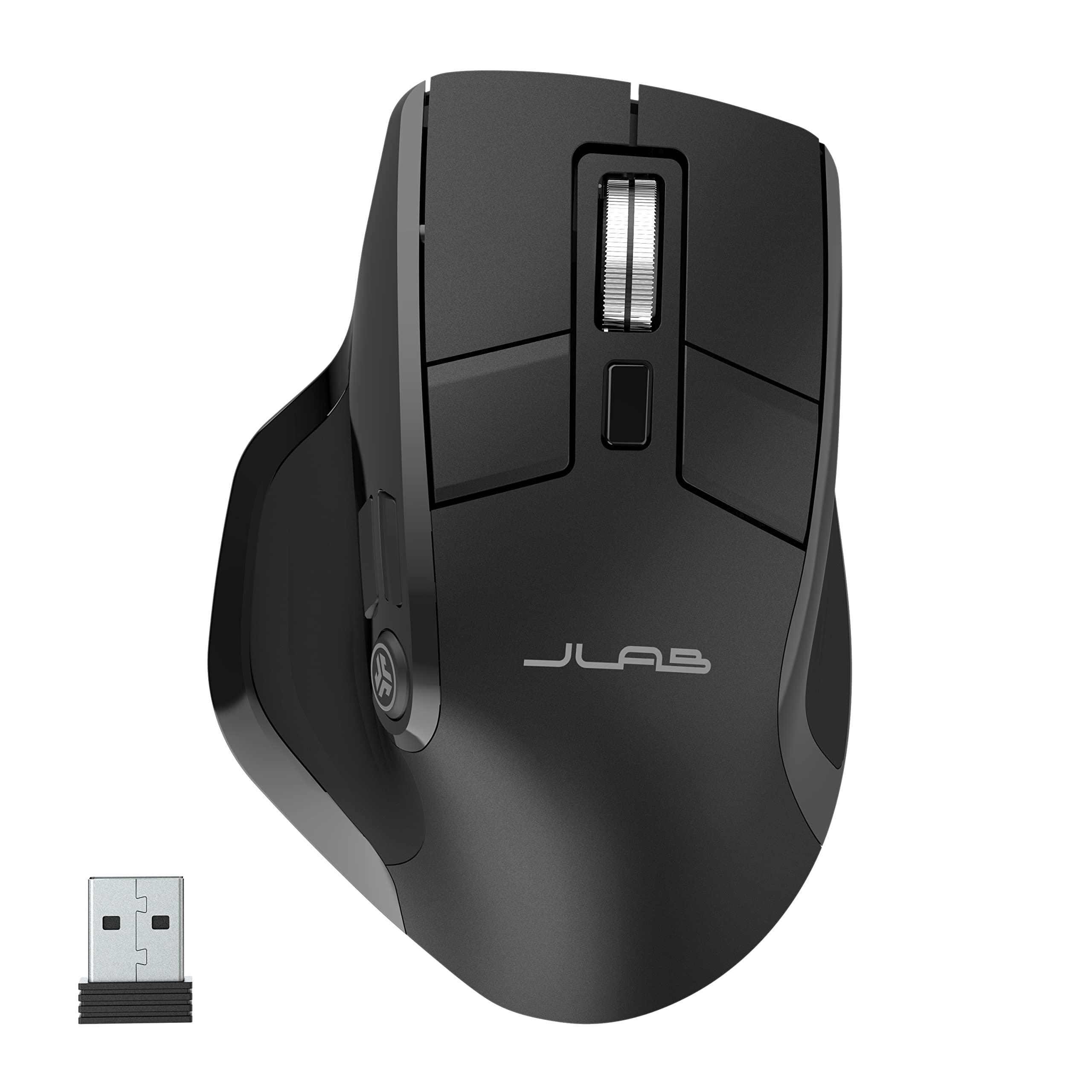
- OLED display shows battery level and current DPI.
- Connects through Bluetooth 5.2 or a USB wireless dongle to up to three devices.
- Supports up to three custom profiles through the JLab Work app.
Best For: Office users who want a full-size rechargeable mouse with an OLED status display and custom profiles.
Portable Multi-Device Work Mouse
JLab, GO Charge, Wireless Mouse, Bluetooth, USB Dongle, Multi-Device, Compact, Rechargeable, Black
The JLab GO Charge pairs a compact design with Bluetooth 5 and a USB wireless dongle, and it can connect to three devices for quick switching. Its adjustable DPI tracking helps tailor cursor speed, while silent click buttons suit shared spaces or calls.
The battery is rated for four or more months per charge, a useful detail for people who prefer fewer charging interruptions. This is a practical fit for a laptop bag or a crowded desk.
Check whether the compact shape suits your hand, and note that the record does not give a charging time.
Best For: People who want a compact rechargeable mouse for switching among work devices.
| Pros | Cons |
|---|---|
|
|
Choose the GO Charge if portability, quiet clicks, and switching between several devices are priorities. The long stated battery interval also suits people who do not want frequent charging.
Its compact format may feel different from a full-size desktop mouse, so check the shape and fit before buying. If you need programmable buttons or a display, the JLab JBuds and Epic options offer those features instead.
Right-Handed FPS Control
SteelSeries Esports Wireless FPS Gaming Mouse - Ultra Lightweight, Prime Programmable, 18K CPI Sensor, Magnetic Optical Switches, PC/Mac, Black
The SteelSeries Prime Wireless is shaped for right-handed players and supports finger, palm, and claw grip styles. Its TrueMove Air sensor is specified at 18K CPI, with 400 IPS and 40G, while Quantum 2.0 wireless is rated for up to 100 hours of battery life.
The six-button layout keeps the controls more focused than the multi-button Aerox options. Its optical magnetic switches are rated for 100 million clicks.
It makes sense for FPS play and general PC use, but left-handed buyers should look elsewhere, and check that the right-hand shape suits your grip.
Best For: Right-handed FPS players looking for a gaming-focused wireless mouse and long stated battery life.
| Pros | Cons |
|---|---|
|
|
Pick the Prime Wireless for a right-handed FPS setup where sensor detail, a familiar six-button layout, and stated battery life matter. Its focus is narrower than a productivity mouse with several programmable controls, and it does not suit left-handed use.
Confirm that its grip shape and six-button arrangement fit your hand and game preferences. If you want a smaller gaming form, the Prime Mini offers a mini design; the Rival models add different connectivity and adjustment features.
Compact FPS Gaming Shape
SteelSeries Esports Mini Wireless FPS Gaming Mouse – Ultra Light – Prime Mini Edition – 5 Programmable Buttons – Lag-free 2.4GHz – 100H Battery – 18K CPI Sensor – Magnetic Optical Switches – PC/Mac
The SteelSeries Prime Mini Wireless combines a 74g mini form with a TrueMove Air sensor specified at 18K CPI, 400 IPS, and 40G. It uses 2.4GHz wireless and has a stated 100-hour battery life, with magnetic optical switches rated for 100 million clicks.
The compact shape gives smaller-hand users or players who favor a streamlined mouse another option within the Prime family. The source details five programmable buttons.
Check whether the reduced form and its button layout suit your grip; the record does not specify dimensions.
Best For: FPS players who prefer a smaller gaming mouse with wireless battery life specified up to 100 hours.
| Pros | Cons |
|---|---|
|
|
The Prime Mini fits players who specifically want a smaller gaming shape and wireless connectivity. Its weight and sensor figures are useful points to compare with other gaming options, but physical measurements and hand-size guidance are not specified.
Check the exact button layout and whether the mini form feels comfortable for your grip. For broader device switching, consider a mouse with Bluetooth support.
Gaming With Two Wireless Modes
SteelSeries Rival 3 Wireless Gen 2 Gaming Mouse — 2.4GHz and Bluetooth — 18000 DPI TrueMove Air Optical Sensor — 60 Million Click Durability — Light-Weight — 100% PTFE Feet — Black
The Rival 3 Wireless Gen 2 switches between a gaming-grade 2.4GHz connection and Bluetooth, making it useful when one mouse serves both a gaming PC and another device. Its TrueMove Air optical sensor is specified at 18,000 DPI, and the source gives click latency of 1.9ms.
Battery life is stated up to 200 hours on 2.4GHz and up to 450 hours on Bluetooth with a AAA battery. That battery depends on connection mode.
Check whether you have a suitable AAA battery and whether the gaming-focused shape and controls meet your everyday needs.
Best For: Players who want to switch between 2.4GHz gaming wireless and Bluetooth, with long stated battery life.
| Pros | Cons |
|---|---|
|
|
Choose the Rival 3 Wireless Gen 2 if you want both gaming-grade 2.4GHz and Bluetooth, with the battery-life figures provided for each mode. The AAA battery is a practical consideration, especially if you prefer a rechargeable mouse.
Its 18K DPI sensor and stated latency target gaming use, while the product record gives less detail about programmable controls. Compare it with the rechargeable JLab choices if office features and device profiles matter more than gaming specifications.
Lightweight Gaming With RGB
SteelSeries Aerox 3 Wireless - Holey RGB Gaming Mouse - Ultra-lightweight Water Resistant Design - 18K DPI TrueMove Air Optical Sensor -Snow
The Aerox 3 Wireless has a perforated shell that brings its stated weight to 68g, plus three-zone PrismSync RGB lighting with 16.8 million configurable colors. It supports both 2.4GHz and Bluetooth 5.0, and its Quantum 2.0 wireless battery life is stated at up to 200 hours.
SteelSeries describes the interior as shielded from water splashes, dust, and dirt, with IP54-rated Aquabarrier technology. This model suits a player who values a light feel and dual wireless modes.
Check the Snow color and shell design, and note that charging time is not specified.
Best For: Players seeking a lightweight gaming mouse with Bluetooth, 2.4GHz, and customizable RGB lighting.
| Pros | Cons |
|---|---|
|
|
The Aerox 3 fits players who want a lightweight mouse with RGB and both Bluetooth and 2.4GHz. Its weight figure and stated protection rating help distinguish it from fuller gaming shapes, but the perforated shell is a matter of preference.
Check whether the listed Snow color is the version you want and confirm that the button layout fits your game. For more side controls, compare the Aerox 5.
Extra Shortcuts in a Lightweight Shell
SteelSeries Aerox 5 Wireless - Holey RGB Gaming Mouse - Ultra-lightweight Water Resistant Design - 9 Buttons – Bluetooth/2.4 GHz - 18K DPI TrueMove Air Optical Sensor
The Aerox 5 Wireless pairs a perforated 74g shell with nine programmable buttons, including a side panel and an up/down flick switch. Its Quantum 2.0 wireless connection supports 2.4GHz and Bluetooth 5.0, with battery life stated up to 180 hours.
The three-zone RGB lighting is configurable, and Aquabarrier technology is rated IP54 for shielding the interior from splashes, dust, and dirt. This layout can suit games that benefit from extra mapped actions without moving to the Aerox 9's 18 buttons.
Check that the added controls match your games and that you are comfortable with the shell style.
Best For: Players who want programmable gaming shortcuts and both Bluetooth and 2.4GHz connections.
| Pros | Cons |
|---|---|
|
|
Choose the Aerox 5 if nine programmable controls offer a useful middle ground between a basic gaming layout and a dense MMO-style button grid. Its 74g weight and dual wireless modes also make it more versatile across setups.
Consider whether the flick switch and side panel fit your preferred grip and games. If you want substantially more thumb-side shortcuts, the Aerox 9 has an 18-button layout; if fewer controls appeal, the Aerox 3 is lighter.
Many Side Buttons for MMO Play
SteelSeries Aerox 9 Wireless - Holey RGB Gaming Mouse - Ultra-lightweight Water Resistant Design - 18 Buttons – Bluetooth/2.4 GHz - 18K DPI TrueMove Air Optical Sensor
The Aerox 9 Wireless puts 18 programmable buttons, including a 12-button side panel, into a perforated shell with a stated weight of 89g. It connects over 2.4GHz or Bluetooth 5.0, and its Quantum 2.0 wireless battery life is given as up to 180 hours.
Three-zone PrismSync RGB adds configurable lighting, while its TrueMove Air sensor is designed for gaming accuracy. This is aimed at games and workflows that use many mapped commands.
The extra side controls demand more thumb input, so check that this layout suits your hand and play style before choosing it.
Best For: Players who want a lightweight gaming mouse with an 18-button layout and dual wireless modes.
| Pros | Cons |
|---|---|
|
|
The Aerox 9 is the option for players who will use a dense set of side buttons for commands or shortcuts. It is heavier than the Aerox 3 and Aerox 5 according to the product records, while retaining the same general perforated Aerox design and dual wireless approach.
Consider your game library and thumb reach before buying; unused buttons can add complexity without helping a simple setup. If you want fewer shortcuts, the Aerox 5 has nine buttons.
Adjustable Weight for Gaming
SteelSeries Rival 650 Quantum Wireless Gaming Mouse - Rapid Charging, 12,000 Cpi Dual Sensor, 256 Weight Configs, 8 Zone RGB Lighting
The Rival 650 Quantum Wireless combines a dual-sensor system with adjustable weight tuning. The product details specify 256 center-of-gravity weight configurations, plus a secondary depth sensor that adjusts lift-off distance from 0.5 to 2 millimeters.
Its battery is stated to last more than 24 hours on a full charge, and a 15-minute rapid charge provides 10 hours. The TrueMove3+ sensor is presented for one-to-one tracking, while the wireless connection is described as lag-free.
This suits players who want to tune balance and lift-off behavior. Check whether you want this level of adjustment and note that Bluetooth support is not specified.
Best For: Players who want adjustable mouse weight and rapid charging for a gaming-focused setup.
| Pros | Cons |
|---|---|
|
|
Choose the Rival 650 if adjusting weight balance and lift-off behavior is central to your gaming setup. Its rapid-charge figure is useful for people who need a quick top-up, though its feature set is more specialized than the work-focused mice here.
Check the exact included weights and connection options before buying, since those details are not specified in the product notes. For dual Bluetooth and wireless connectivity without weight tuning, compare the Aerox or Rival 3 options.
OLED Display and Profile Switching
JLab, Epic, Wireless Mouse, Bluetooth, Multi-Device, OLED Display, Full-Size
This full-size JLab Epic mouse has an OLED display that shows battery level and current DPI, along with adjustable DPI tracking. It connects through Bluetooth 5.2 or a USB wireless dongle and can toggle among up to three paired devices.
The JLab Work app supports up to three custom button profiles, and silent clicks suit shared offices or quiet spaces. Its 800 mAh rechargeable battery is specified, though no run time is given.
The display and profiles make it a good fit for people who adjust settings across tasks. Check whether you need stated battery duration before deciding.
Best For: Office users who want a full-size rechargeable mouse with an OLED status display and custom profiles.
| Pros | Cons |
|---|---|
|
|
Pick the Epic if you value at-a-glance DPI and battery status, silent clicks, and profiles for up to three devices. It is a full-size design, unlike JLab's more portable GO Charge.
The source identifies the rechargeable battery capacity but gives no runtime, so check that detail if time between charges matters. Also confirm that its profile and button customization meet your needs; its clearest distinction is visible status information rather than a stated long battery interval.
How to Choose Wireless Mice
How We Picked Wireless Mice
We chose products that serve clear wireless-mouse needs: gaming controls and tracking, office device switching, quieter clicks, ergonomic adjustment, and compact travel. The selection includes both Bluetooth and 2.4GHz options where those modes are supported, alongside products focused on a single wireless connection.
Gaming candidates cover lightweight shells, mapped buttons, and adjustable weight. Work options add features such as rechargeable batteries, custom profiles, and status displays.
We used the supplied product details to distinguish use cases and surface buying checks that matter, including hand orientation, button layout, battery type, and whether runtime is actually specified. A feature-rich mouse can be a poor fit if its shape or controls do not suit your grip and tasks.
Compare only the features you expect to use.
Comparing Wireless Mice for Work and Gaming
The SteelSeries options focus on play: Aerox models combine a perforated shell with configurable RGB, while their button counts range from the Aerox 3's simpler arrangement to the Aerox 9's 18-button layout. Prime Wireless emphasizes a right-handed FPS shape and sensor details; the Prime Mini offers a smaller form.
Rival models add other tradeoffs, including two wireless modes on the Rival 3 Gen 2 and adjustable weight on the Rival 650.
The JLab choices center on work. GO Charge is compact and gives a stated multi-month battery interval; JBuds adds seven programmable buttons and custom profiles; Epic puts DPI and battery status on an OLED screen.
The ESR MagMouse candidate emphasizes a carry holder and built-in charging cable, while Contour Unimouse offers adjustable tilt and thumb support. The comparison table below helps line up those roles and documented features.
| Product | Standout features | Best for |
|---|---|---|
| JLab GO Charge Wireless MouseCheck Price |
| People who want a compact rechargeable mouse for switching among work devices. |
| SteelSeries Prime WirelessCheck Price |
| Right-handed FPS players looking for a gaming-focused wireless mouse and long stated battery life. |
| SteelSeries Prime Mini WirelessCheck Price |
| FPS players who prefer a smaller gaming mouse with wireless battery life specified up to 100 hours. |
| SteelSeries Rival 3 Wireless Gen 2Check Price |
| Players who want to switch between 2.4GHz gaming wireless and Bluetooth, with long stated battery life. |
| SteelSeries Aerox 3 WirelessCheck Price |
| Players seeking a lightweight gaming mouse with Bluetooth, 2.4GHz, and customizable RGB lighting. |
| SteelSeries Aerox 5 WirelessCheck Price |
| Players who want programmable gaming shortcuts and both Bluetooth and 2.4GHz connections. |
| SteelSeries Aerox 9 WirelessCheck Price |
| Players who want a lightweight gaming mouse with an 18-button layout and dual wireless modes. |
| SteelSeries Rival 650 Quantum WirelessCheck Price |
| Players who want adjustable mouse weight and rapid charging for a gaming-focused setup. |
| JLab Epic Wireless MouseCheck Price |
| Office users who want a full-size rechargeable mouse with an OLED status display and custom profiles. |
Choosing a Wireless Mouse for Your Grip and Desk
Shape affects day-to-day comfort and control. The Prime Wireless is right-handed, and the Unimouse is also designed for right-handed users, with tilt adjustable from 35° to 70° and a movable thumb rest.
The JLab JBuds and Epic are full-size, while GO Charge is described as ultra-compact. For the Aerox series, consider whether the perforated shell appeals to you and how many side controls you will actually use.
On a shared desk, silent clicks may be useful: JLab JBuds and Epic specify them, and the GO Charge also has silent click buttons. Multi-device users should check the exact connection versions and whether the mouse switches among paired devices.
Receiver and Bluetooth support differ by model, so confirm the mode you intend to use with your computer.
Battery and Connection Details to Check
Battery figures are not directly comparable unless the connection mode and battery type match. Rival 3 Wireless Gen 2 gives separate maximum runtimes for 2.4GHz and Bluetooth with a AAA battery, while SteelSeries Aerox models give stated runtimes alongside their Quantum 2.0 connections.
JLab GO Charge gives a months-per-charge figure, but the Epic and JBuds records do not state runtime. Treat missing runtime as a detail to verify before purchase.
Also check what charging method or battery the particular mouse uses. Rival 650 highlights rapid charging, while the selected JLab devices are rechargeable.
The Prime Mini specifies 2.4GHz; Prime Wireless details Quantum 2.0 wireless. Bluetooth can help reduce dependence on a receiver, while a dongle can be useful when the device supports the intended connection.
Match the mouse's connection options to the ports and devices you use.
Who Should Buy Which Wireless Mouse
For office work across devices, compare JLab JBuds, Epic, and GO Charge: choose around full-size versus compact fit, programmable profiles, visible status, and battery information. If you work in a quiet shared space, prioritize models with silent clicks.
For a travel setup, look for a compact shape and confirm how it charges before packing it.
For FPS gaming, Prime Wireless and Prime Mini focus on a right-handed or compact gaming shape, while Rival 3 Gen 2 adds Bluetooth alongside 2.4GHz. Aerox 5 suits players who want extra programmable buttons without the Aerox 9's dense side panel; Aerox 9 is aimed at users who will map many commands.
If adjustable wrist angle is the priority, examine the Contour Unimouse and confirm right-hand fit. Match your choice to the grip, controls, and connection you will use daily.